Chronometry of cognitive function dynamics
Since 1968, the CRD method has developed a chronometric approach that measures the examinee's actual functional potential at the moment of testing.
History since 1968
The CRD system started developing in 1968 with the aim of precise measurement of mental processing dynamics.
Author and scientific foundation
The method is connected with the work of Dr. Drenovac and the theory of chronometry of mental processing dynamics.
Ultimate advantage of the CRD method
The CRD methodology measures the examinee's actual potential at the moment of testing and reveals deficits and functional disturbances through speed, stability, endurance and reliability.
Cognitive profile and dynamic types
Chronometric indicators form a dynamic examinee profile.
Dynamic types
High current potential with consistent performance.
Good initial speed with oscillation.
Lower processing speed with consistent responses.
Reduced speed and impaired stability.
Preserved quality across longer task series.
Performance drop during the test.
How CRD Results Become Knowledge
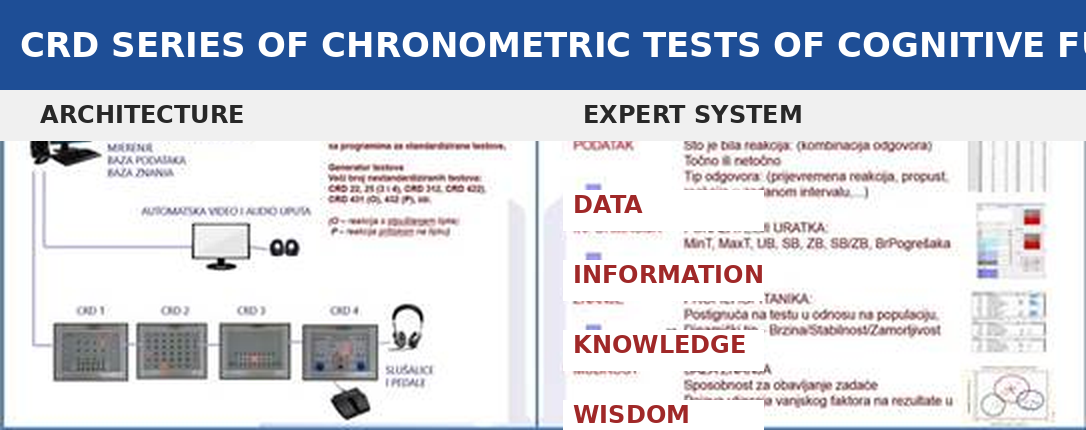
System Architecture